he Fluazinam Fungicide Market is projected to reach USD 1.2 billion by 2035, growing from USD 776.9 million in 2025. This reflects a compound annual growth rate (CAGR) of 4.4%. As of March 11, 2026, the market is navigating a critical year defined by its unique role in “Anti-Resistance” programs, even as it faces its own emerging resistance challenges in the UK and Europe.
Market Dynamics & Strategic Overview
In 2024, the market was valued at USD 744.1 million. By March 2026, the strategic importance of Fluazinam has surged due to its classification as a Low-Risk Multi-Site Inhibitor. In an era where many single-site fungicides are failing due to pathogen mutation, Fluazinam’s ability to uncouple oxidative phosphorylation makes it a cornerstone of Integrated Pest Management (IPM).
The progression toward the USD 1.2 billion target is primarily driven by the Potato Late Blight Crisis. In early 2026, the discovery of new, highly aggressive blight strains (like the EU_43 genotype) has rendered some common chemistries (like CAA fungicides) less effective. This has forced agronomists to increase the frequency of Fluazinam applications—often up to 10 sprays per season in high-pressure regions—to protect both foliage and high-value tubers.
GLOBAL REGULATORY & BIOLOGICAL ALERT (MARCH 11, 2026)
As of this week, the Fluazinam market is operating under a “Vigilance Mandate”:
-
The UK “EU_37” Resistance Milestone: While Fluazinam was long considered “resistance-proof,” independent monitoring in late 2025 and March 2026 has confirmed established resistance in certain UK populations of Phytophthora infestans (specifically the 37_A2 and 33_A2 strains). This is leading to a major shift toward co-formulations where Fluazinam is mixed with actives like Cymoxanil or Amisulbrom to restore efficacy.
-
EU Regulatory Reform (2026): In January 2026, the European Commission introduced a new “Unlimited-Period Approval” model for certain low-risk substances. Fluazinam is currently under intense scrutiny within this framework; while its approval was extended to 2026, its future depends on upcoming risk-based re-evaluations regarding its impact on non-target organisms like pollinators and fish.
-
US EPA Tolerance Updates: On November 17, 2025, the EPA finalized new residue tolerances for Fluazinam. In March 2026, US manufacturers are adjusting labels to ensure compliance with these “Maximum Residue Levels” (MRLs), which is crucial for farmers exporting crops to the EU and Asian markets.
Request a Sample Report for an urgent 2026 assessment of the “EU_43” blight strain impact on fungicide programs and a detailed analysis of the current LME-driven price fluctuations for technical-grade Fluazinam.
Key Market Trends & Insights (2026 Update)
-
Suspension Concentrate (SC) Lead: The SC formulation remains the 2026 industry favorite (holding ~60% share) due to its ease of use in precision sprayers and better rain-fastness compared to wettable powders.
-
Turf & Ornamental Growth: Beyond agriculture, Fluazinam is seeing a 5.2% growth in the golf course sector for controlling “Dollar Spot,” though 2026 reports show “reduced sensitivity” in some high-maintenance turf environments.
-
Asian Supply Dominance: China continues to be the primary exporter of 98% TC (Technical Grade) Fluazinam. However, 2026 has seen a rise in “Secondary Bio-Hubs” in India and Brazil as global firms seek to diversify their supply chains.
-
Sustainability Labeling: New for 2026, manufacturers are introducing “Eco-Verified” packaging that emphasizes Fluazinam’s rapid soil metabolism, positioning it as a more environmentally friendly option compared to persistent organochlorine fungicides.
Get a sample report PDF: https://www.wiseguyreports.com/sample-request?id=615155
Market Segmentation Analysis
The Fluazinam Fungicide Industry is segmented by application and chemistry to address 2026’s resistance-heavy environment:
-
By Application:
-
Vegetables (Potatoes/Tomatoes): The dominant segment, focused on foliar and tuber blight control.
-
Fruits (Grapes/Apples): Essential for managing Downy Mildew and Grey Mould.
-
Turf & Ornamentals: High-value maintenance for sports turf and commercial nurseries.
-
-
By Chemical Formulation:
-
Suspension Concentrate (SC): Liquid-based, high-stability standard.
-
Wettable Powder (WP): Cost-effective but facing decline due to handling safety concerns.
-
Emulsifiable Concentrate (EC): Targeted at specific fruit and vegetable niche markets.
-
-
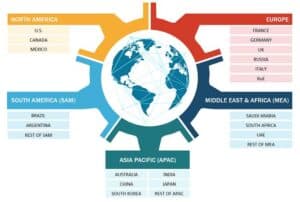
By Regional Focus:
-
Asia-Pacific: The largest market, driven by massive potato production in China and India.
-
Europe: The center of regulatory innovation and the front line of the blight resistance crisis.
-
South America (Brazil): Growing use in soy and vegetable rotations to manage “white mold.”
-
Related Reports
Frequently Asked Questions
Is Fluazinam still effective against late blight in 2026?
Yes, but with caveats. While it remains a high-potency “protectant,” the rise of the 37_A2 and EU_43 strains in 2026 means that Fluazinam should no longer be used as a standalone curative. Expert advice for the 2026 season is to use it in alternating blocks or tank mixes with different modes of action to prevent further resistance buildup.
Why is it called an “Uncoupler” of oxidative phosphorylation?
In simple terms, it breaks the “power plant” of the fungal cell. It allows the cell to continue consuming energy without actually producing ATP (the cell’s fuel). This effectively starves the fungus at a molecular level. Because this process is so fundamental, fungi find it harder to develop resistance compared to chemicals that target only a single protein or enzyme.
Would you like me to generate a technical 2026 spray-program comparison between a standard Fluazinam rotation and the new “Triple-Action” mixes designed for the resistant EU_43 blight strain?